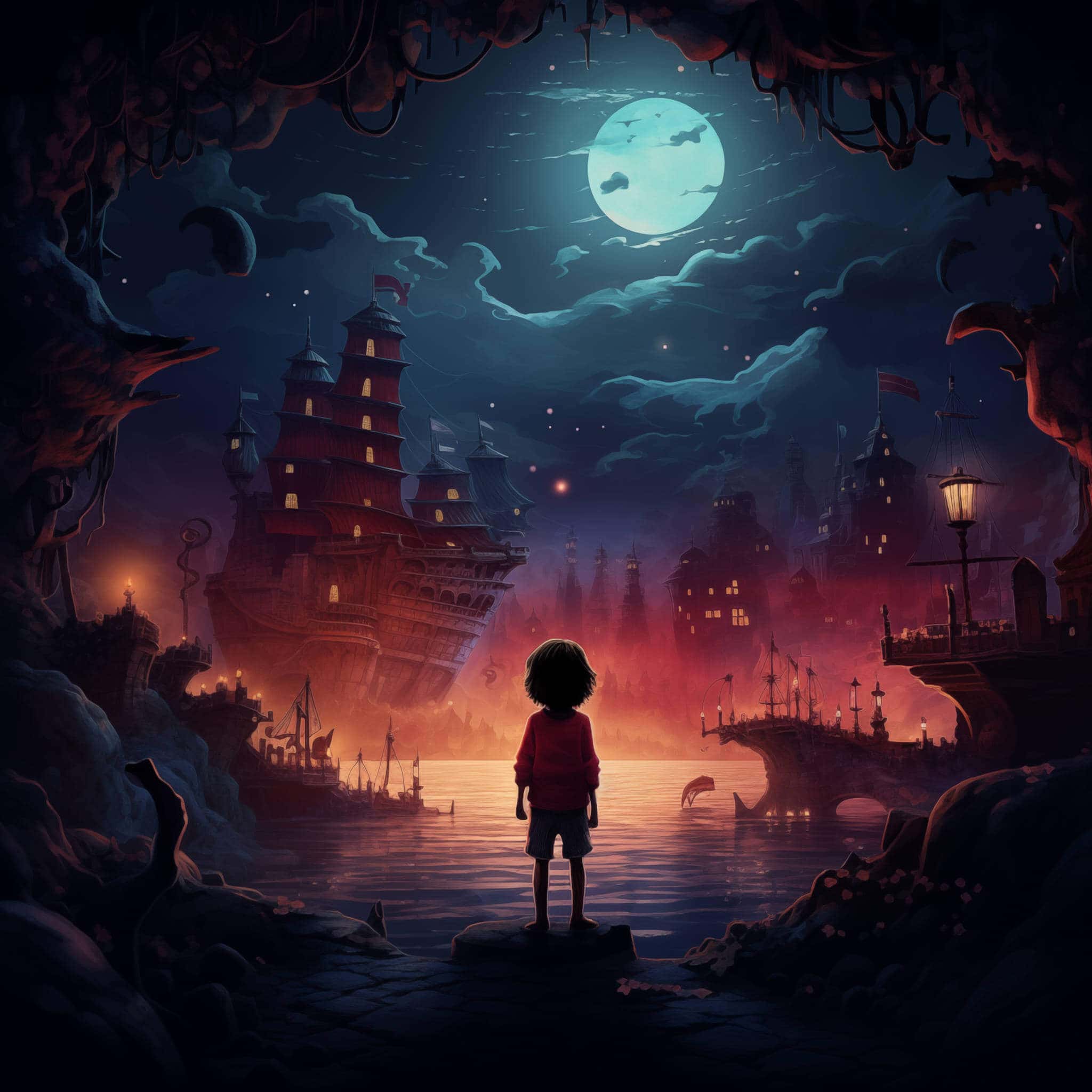

AI’s Impact on Personalized Kids’ Books
Artificial intelligence is quietly reshaping what storytime looks like. Instead of one size fits all picture books, we now have apps and platforms that spin up custom tales on demand, tuned to a child’s name, interests, and even their drawings. It is exciting, a bit weird, and full of both promise and real concerns. Let’s unpack how this shift is changing kids’ books, what works, what worries people, and what it all might mean for the future of your bookshelf.
Rise of AI in children’s publishing
In the past, "personalized" kids’ books usually meant a printed story where the publisher swapped in your child’s name and maybe their hair color. Today, AI systems can generate entirely new plots, characters, and illustrations in seconds.
A growing wave of AI-driven tools now allows parents to generate stories featuring their child as the hero, complete with tailored storylines and imagery. Some services focus on narrative depth, others on visual personalization, and some — like Wonder Saga — let families shape morals, characters, and settings with just a few prompts.
These tools lean on advances in natural language processing and image generation. Instead of hiring an author, illustrator, editor, designer, and printer, a parent can tap a screen and watch a fully formed digital book appear.
The shift is similar to what streaming did for TV, a move from mass broadcast to highly personalized content, only this time the "channel" is your child’s reading app.
Defining personalization in young readers’ content
"Personalized" kids’ stories can mean a lot more than a custom cover. At the moment, AI-powered systems are personalizing across several dimensions.
Identity The child can appear as the protagonist, with their name, appearance, and even personality woven into the plot. Some tools let you upload drawings or photos to inspire both the story and its illustration.
Interests and themes Does your kid love dinosaurs, baking, or space travel? AI can incorporate those topics and pair them with selected themes such as friendship, sharing, or confidence. Parents can often choose a core moral or life lesson they want the story to gently explore.
Reading level and length Because AI can vary vocabulary and syntax, platforms can adjust text complexity and story length to suit a child who is just recognizing sight words or one who is reading independently.
Cultural and family context Names, settings, holidays, and family structures can reflect a child’s real life more closely than many traditional books do. That might mean seeing their language or hometown scenery on the page.
These systems are not simply mad libs with a name dropped in. Many create stories and illustrations from scratch each time, based on the details adults supply. Parents or teachers can guide the plot, choose how long the story should be, and steer toward certain values, which keeps them in the driver’s seat instead of handing total control to an algorithm.
Key advantages: engagement, inclusivity, literacy growth
When a child sees themselves at the heart of a story, everything changes. They are not just a reader; they are the hero.
1. Stronger engagement Personalized AI books consistently report higher levels of attention and excitement. Children are more likely to ask for "their" story again or to stay focused to the final page because the narrative feels about them rather than about some generic character.
Research backs this up. In the Metabook study, an AI system that generated interactive AR storybooks boosted kids’ interest in reading and improved vocabulary retention. When stories respond to a child’s world and attention, the reading session becomes more like a game than a chore.
2. Greater inclusivity and representation Many families still struggle to find books where their child’s culture, language, or family structure appears naturally. AI can help fill that gap quickly by tailoring names, locations, food, or traditions to match a child’s lived experience.
This does not replace the importance of traditionally published, carefully curated diverse books, but it can supplement them with a huge variety of bespoke tales where no child has to "translate" themselves into the story.
3. Fine-tuned literacy support Because AI can instantly adapt difficulty, it is possible to create material right at the edge of a child’s skills. Text can be simplified for early readers or enriched with more challenging vocabulary for advanced ones. That just-right level supports decoding practice without boredom or frustration.
Interactive elements can also be woven into the narrative, such as built-in comprehension questions, vocabulary highlights, or prompts that ask a child to predict what happens next. The Metabook research showed how these features can help kids better remember new words and ideas.
If your child already loves a good kids bedtime story, personalization can turn that familiar ritual into a powerful, targeted literacy boost without sacrificing the cozy, imaginative feel.
Challenges: privacy, bias, and developmental suitability
The flip side of personalization is that it requires data. That raises hard questions, especially when children are involved.
1. Data privacy and control To create tailored stories, platforms often collect names, interests, ages, and sometimes photos or drawings. A systematic review on youth privacy in AI systems found that young users frequently feel they have little control over how their data is used and worry about misuse or hidden tracking, especially when data practices are opaque. You can read more about these concerns in the review on navigating AI and youth privacy.
For parents, this means it is essential to check privacy policies and terms carefully, understand what is stored, for how long, and whether data is used to train models, and prefer services that explain their data practices in clear language and offer robust controls.
2. Algorithmic bias and stereotypes If the AI models are trained on skewed or limited data, stories could unintentionally reinforce stereotypes around gender, race, or disability. Without oversight, a helpful algorithm could default to narrow or biased character roles.
Developers and educators need to audit outputs, introduce diverse training data, and make it easy for users to flag problematic content. Human review is still crucial.
3. Developmental appropriateness Just because an AI can generate any story does not mean it should. Content has to align with a child’s emotional and cognitive stage.
Work on AI-assisted tools such as AutiHero, which helps parents create social narratives for autistic children, stresses the importance of adult involvement. In that study, parents worked closely with the AI to customize stories so they matched their child’s specific needs rather than trusting a generic output.
The lesson is clear: personalization should be guided, not automatic. Adults still need to read, select, and sometimes edit AI stories before handing them to kids.
Human authors and algorithms: finding the balance
The rise of books like "Alice and Sparkle", one of the first AI-generated children’s titles, triggered spirited debate. Critics questioned whether algorithmic tales could match the depth, originality, and emotional nuance of human-written stories. Others worried about devaluing the craft of authors and illustrators.
In reality, we are likely heading for a hybrid model. AI can serve as a creative assistant, as authors and educators use it to brainstorm plots, generate first drafts, or quickly spin off alternate versions of a story for different reading levels or cultural contexts. Humans remain curators and storytellers, since they excel at emotional truth, subtext, and lived experience, and they can decide which AI ideas are worth keeping, weld them into coherent narratives, and inject warmth and subtlety that pure pattern matching struggles to reach.
Families can act as co-creators, as parents and kids sit together and decide on characters, morals, or settings. Tools that let you create your own bedtime story turn the process into a shared activity rather than a passive product; the AI does the heavy lifting, but the family imagines the heart of it.
The risk is not that AI kills authorship, but that we offload too much taste and responsibility onto unexamined systems. The opportunity is to use these tools to widen who gets to tell stories and who sees themselves inside them.
What the future holds for parents, educators, and publishers
We are still early in this shift, but the direction is becoming clearer.
For parents Expect more tools that let you set parameters such as length, moral, main character traits, and content boundaries; save and revisit favorite stories across devices; and give feedback on quality so the system improves over time. The best platforms will combine strong privacy protections with meaningful parental controls and simple ways to report issues.
For educators AI personalized stories could supplement classroom libraries with differentiated texts for varied reading levels within one class, materials reflecting each student’s culture and interests, and custom social stories for specific situations or needs. Teachers will need clear guidelines around data usage, content vetting, and how to integrate AI materials alongside traditional books and author visits.
For publishers AI is as much a new tool as it is a new competitor. Traditional houses may offer adaptive editions of existing titles that adjust for reading level, partner with AI platforms to build interactive or localized spin-offs, and invest more heavily in human-authored flagship works, with AI handling personalization around the edges.
Across all of this, one thing should stay constant: children deserve stories that are safe, rich, and meaningful. AI can help create more of those for more kids, but only if parents, teachers, developers, and publishers stay involved, ask hard questions about privacy and bias, and treat algorithms as tools rather than oracles.
The future of personalized kids’ books is not about replacing the magic of storytelling. It is about using new technology, carefully and thoughtfully, so that more children can see themselves as the heroes they already are.